
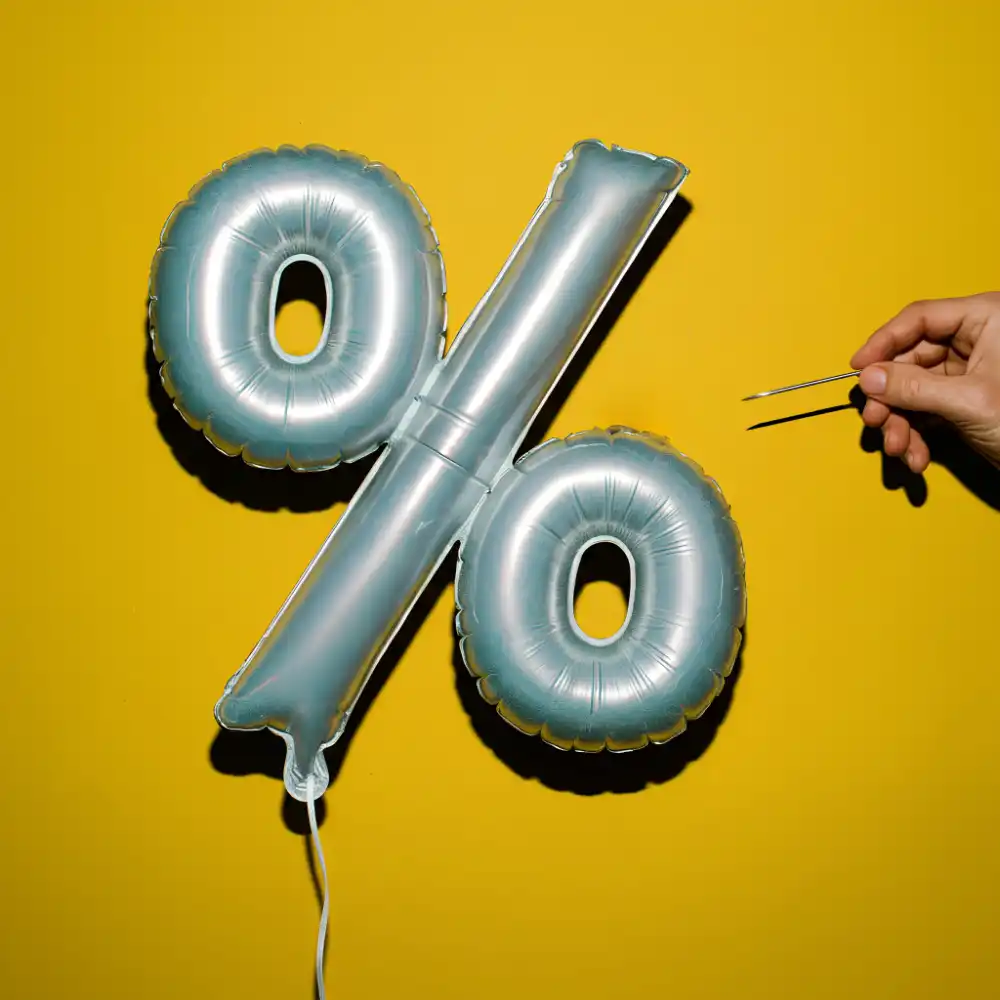
In today’s fast-paced digital world, social media marketers often rely on rapid-fire, swipe-through promotions, assuming that quick exposure equals effective engagement. However, academic research contradicts this assumption, showing that such fast content consumption neither sustains meaningful engagement nor reliably drives actual behavioral change.
The engagement-action Discrepancy: Metrics may lie
Here’s the uncomfortable truth: your engagement metrics are lying to you. That spike in clicks, those milliseconds of screen time, the passive scrolls that register as “views”—none of it means your audience actually cares. Ellison et al. (2020) found that users frequently view content without clicking or interacting meaningfully, highlighting a fundamental disconnect between passive attention and actual engagement. The real kicker? Yousef (2021) demonstrated that social advertising engagement does not necessarily translate into concrete consumer actions or purchases. You can have thousands of recorded “engagements” while your conversion rates plummet. This disparity reveals a critical flaw in how marketers measure success: while fast promotions reliably boost superficial indicators, they catastrophically fail at prompting real-world behaviour. The metrics you celebrate are often the metrics that matter least.
Cognitive load and reduced analytic thinking: When the brain shuts down
The swipe-based consumption model doesn’t just fail to persuade—it actively sabotages persuasion. Jiang & Ma (2024) demonstrated that TikTok-style quick video swiping diminishes analytic thinking, forcing users into automatic, surface-level processing rather than reflective decision-making. Your fast promotional content isn’t just ignored; it’s cognitively incompatible with the type of thinking required for meaningful behavioral change. To make it worse, Clutch (2025) found that only 9% of consumers fully focus while viewing short-form, swipeable content. That means 91% of your audience is in cognitive autopilot when they encounter your promotion. They’re not ignoring your message—their brains are literally incapable of processing it thoughtfully while in swipe mode.
Promotional fatigue and brand avoidance: The unfollow button awaits
People aren’t just scrolling past your promotions—they’re actively abandoning your brand because of them. Adweek (2016) found that high volumes of promotional posts drive users to unfollow brands outright, a trend confirmed by GoodFirms (2025), which documented a 12.38% unfollow rate specifically attributed to overwhelming promotional messaging. But the damage goes deeper. Kothari (2025) reveals that consumers perceive brands pushing rapid-fire promotions as fundamentally inauthentic. This isn’t a minor perception problem; it’s a trust collapse that triggers disengagement and eroded loyalty. Every swipe-based promotion you deploy isn’t just failing to convert—it’s actively pushing your audience toward competitors.
Persuasion knowledge and consumer skepticism: Your audience is onto you
Consumers have weaponised their scepticism. Rahmani (2023) documents how consumers develop “persuasion knowledge”—a learnt awareness of marketing tactics that functions as a cognitive defence mechanism. When your promotional strategy is fast, obvious, and aggressive, you activate these defences immediately. Boerman (2024) confirms that this exact transparency intensifies consumer resistance and significantly reduces the likelihood of successful persuasion. Your fast-swipe promotions don’t just fail—they educate your audience about your tactics, making them more resistant to all your future marketing efforts.
Active vs Passive engagement: You’re probably optimizing for the wrong thing
Not all engagement is created equal—and most of what you’re measuring isn’t engagement at all. Godard & Holtzman (2024) and Taylor et al. (2023) distinguish sharply between active engagement (comments, shares, genuine interactions) and passive engagement (scrolling, viewing)—the latter associated with negative psychological effects and virtually no behavioural influence. Here’s the catch: fast-swipe promotions are deliberately designed to maximise passive metrics while minimising genuine engagement. You’re optimising for the engagement that doesn’t matter while systematically destroying the engagement that does.
Path Forward: Authentic, reflective content
Authenticity and content depth predict engagement that drives behaviour. Kothari et al. (2025) emphasises trust-building, transparency, and storytelling as effective drivers of consumer action. Additionally, optimal engagement occurs when cognitive load is managed, allowing users to process content reflectively rather than impulsively (Gierczyk et al., 2025).
Conclusion
While fast/swipe social media promotions deliver high reach and engagement numbers, these metrics can be misleading, especially when they interact with the confirmation bias of a marketing executive often craving fast but rarely meaningful results. They often reflect passive, superficial interactions rather than meaningful, actionable engagement. More sustainable results come from strategies grounded in authenticity, audience respect, and content designed to foster genuine connection and thoughtful interaction.
References
Adweek. (2016, August 29). Too many promotional brand posts drive users away—Report. https://www.adweek.com/performance-marketing/too-many-promotional-brand-posts-drive-users-away-report/
Boerman, S. C., Van Reijmersdal, E. A., & Rozendaal, E. (2023). A closer investigation of dispositional persuasion knowledge of sponsored content: Exploring determinants and clusters. Journal of Marketing Communications, 30(6), 660–680. https://doi.org/10.1080/13527266.2023.2175893
Clutch. (2025). Creating in the attention economy: You have 30 seconds to capture it. https://clutch.co/resources/attention-economy-2025
Ellison, N. B., Triệu, P., Schoenebeck, S., Brewer, R., & Israni, A. (2020). Why We Don’t Click: Interrogating the Relationship Between Viewing and Clicking in Social Media Contexts by Exploring the “Non-Click”. Journal of Computer-Mediated Communication, 25(6), 402-426. https://doi.org/10.1093/jcmc/zmaa013
Gierczyk, M., Karwowski, M., Paas, F., & H. Tai, R. (2025). STEM Workshop Learning: Content Load Effects on Cognitive, Interaction, and Emotional Outcomes. The Journal of Experimental Education, 1–22. https://doi.org/10.1080/00220973.2025.2513254
Godard, R., & Holtzman, S. (2024). Are active and passive social media use related to mental health, wellbeing, and social support outcomes? A meta-analysis of 141 studies. Journal of Computer-Mediated Communication, 29(1). https://doi.org/10.1093/jcmc/zmad055
GoodFirms. (2025). Top reasons a brand gets unfollowed on social media. https://www.goodfirms.co/resources/reasons-brands-get-unfollowed-social-media
Jiang, Q., & Ma, L. (2024). Swiping more, thinking less: Using TikTok hinders analytic thinking. Cyberpsychology: Journal of Psychosocial Research on Cyberspace, 18(3), Article 1. https://doi.org/10.5817/CP2024-3-1
Kothari H, Choudhary A, Jain A, Singh S, Prasad KDV and Vani UK (2025) Impact of social media advertising on consumer behavior: role of credibility, perceived authenticity, and sustainability. Frontiers in Communication. https://doi.org/10.3389/fcomm.2025.1595796
Rahmani, V. (2023). Persuasion knowledge framework: Toward a comprehensive understanding. AMS Rev 13, 12–33 (2023). https://doi.org/10.1007/s13162-023-00254-6
Taylor, Z., Yankouskaya, A., & Panourgia, C. (2023). Social media use, loneliness and psychological distress in emerging adults. Behaviour & Information Technology, 43(7), 1312–1325. https://doi.org/10.1080/0144929X.2023.2209797
Yousef, M. (2021). Social advertising effectiveness in driving action: A study of user behavior. International Journal of Advertising, 40(5), 712–729. https://doi.org/10.3390/ijerph18115954