
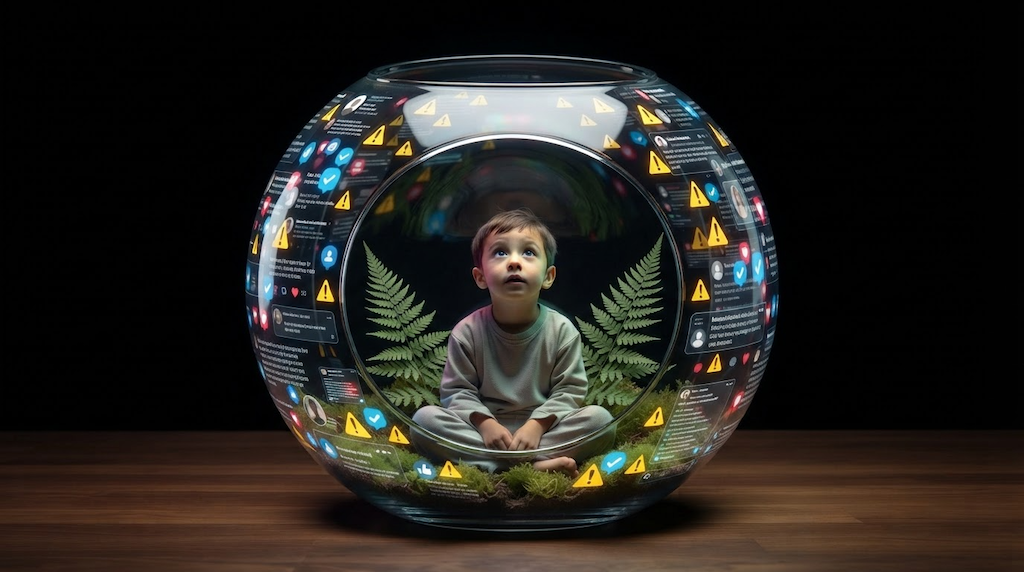
Stop blaming Gen Z as if they somehow appeared from nowhere with broken attention spans and zero resilience. The more honest reading is harsher: we built the environment that trained them, rewarded them, and then acted surprised when the results became visible.
We taught children to calm down with screens in restaurants, cars, airports, and at home, then we wondered why boredom, waiting, and discomfort became intolerable without a device. That is not a generational mystery; it is conditioned behaviour.
What we normalised, harms our minds
We grew up surrounded by cheap, high-noise media, and then we handed the same model to children in a much stronger form: endless feeds, scroll loops, and algorithmic junk food. The format changed, but the logic stayed the same: easy consumption, constant stimulation, very little depth.
Social platforms then turned performance into the norm. Posting became about looking acceptable, desirable, or impressive, while usefulness and substance were pushed aside by image management and noise. That is the culture we designed, so pretending young people invented it is dishonest.
If you train people to avoid friction, they become less practised at tolerating it. If you train them to consume quickly, they become less comfortable with slow thinking, delayed reward, and sustained attention. That does not make them defective; it makes them product-aware.
There is also a real concern behind the rhetoric: some recent research and commentary points to a reverse Flynn effect, where cognitive test scores have declined in some groups and places after decades of gains. The causes are still debated, but digital media use, attention fragmentation, and reduced deep reading are part of the discussion.
AI is not a shortcut. It’ a tool we need to use responsibly
The AI pitch often makes this worse, not better. “Get smarter faster,” “work without friction,” “five tools and done” is not progress if the tool simply removes the very struggle that builds judgement, memory, and skill. That is not efficiency; it is dependency with cleaner packaging.
Used well, AI can extend capability. Used badly, it becomes a machine for outsourcing thought, which is exactly the habit problem we already created with screens and social media. If the tool makes reflection optional, it is not freeing people; it is thinning them out, leading to idiocracy.
What has to change
If we want a different generation, we need different defaults in homes, schools, media, and workplaces. That means less tolerance for mediocrity, less celebration of shallow performance, and less lazy language pretending that ease equals progress.
The uncomfortable truth is that this is mostly about adults, not teenagers. The younger generation is showing us the output of a system we approved, funded, and repeated. If that stings, good — discomfort is often the first sign that the diagnosis is accurate.